By Filip Przbylo
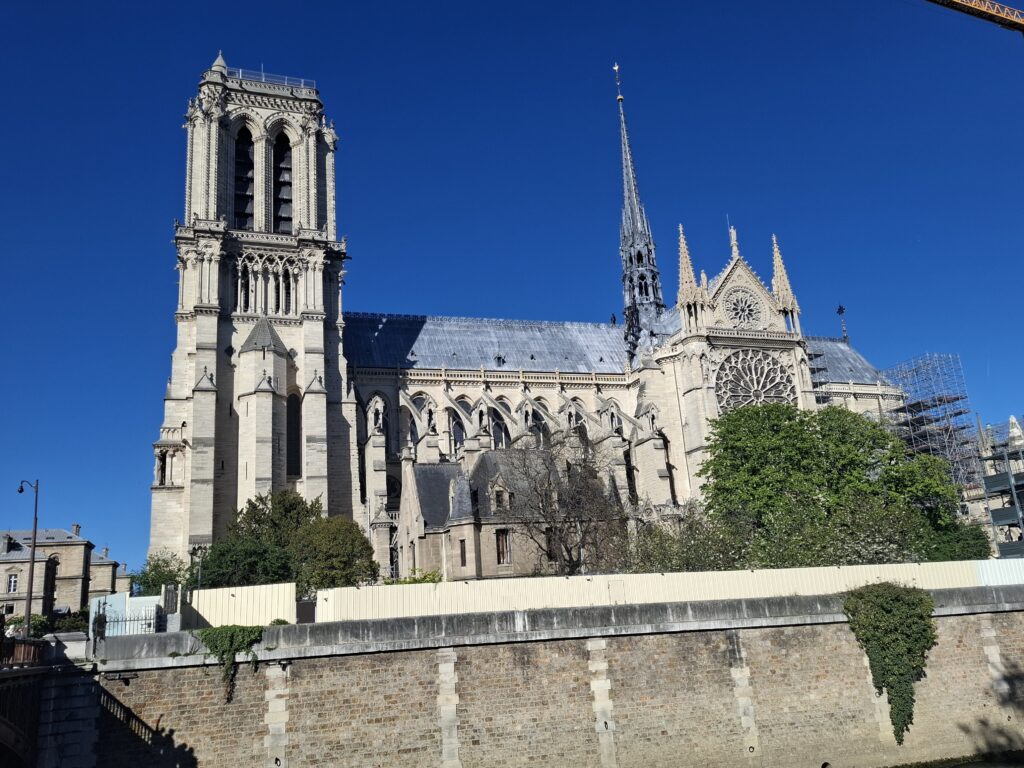
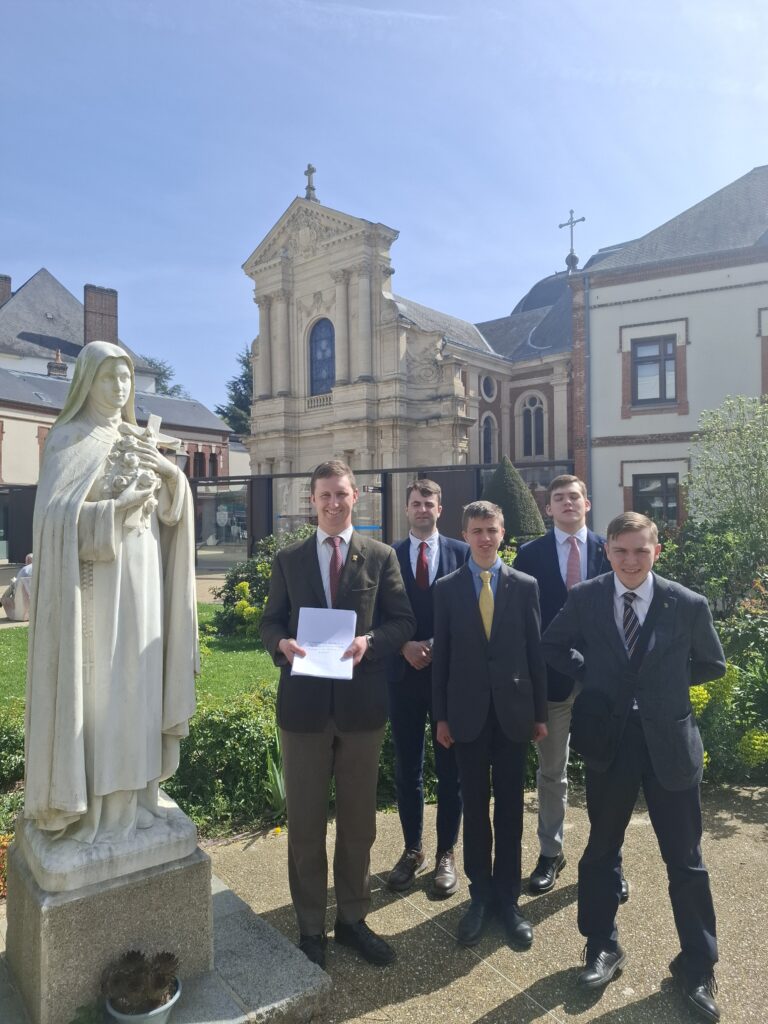
Last Easter week, members and volunteers of the Irish Society for Christian Civilisation (ISFCC) drove through France, delivering petitions at Saint Therese of the Child Jesus’ shrine in Lisieux.
Approaching from the north-east, the pilgrims made a stop at a few places of interest. First was Paris. A TFP member based in the city gave us a tour of the many monuments of Christian Civilisation.
The group began with a visit to Saint-Roche Church. Magnificent side altars and Christian art were but a foretaste of the succeeding visits.
After admiring the statue of Saint Joan of Arc, the group had lunch in the Palais Royal. Those acquainted with the history of the French Revolution noted the unfortunate conspiracies of the former proprietor of the park, the Duke of Orleans, which took place there.
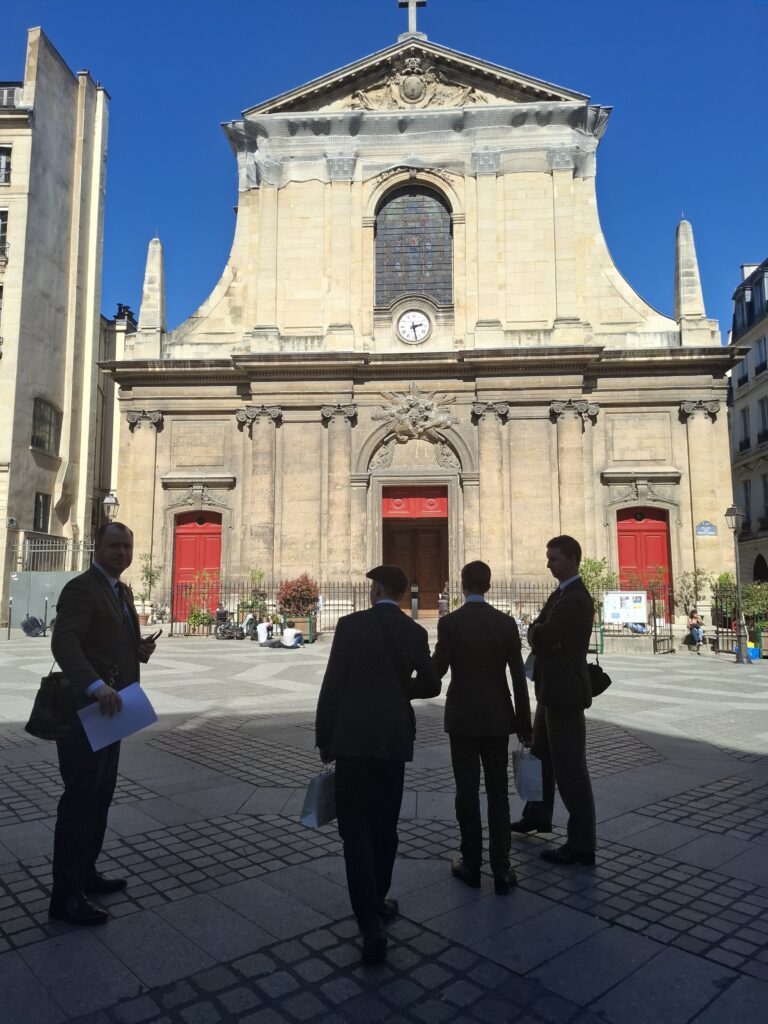
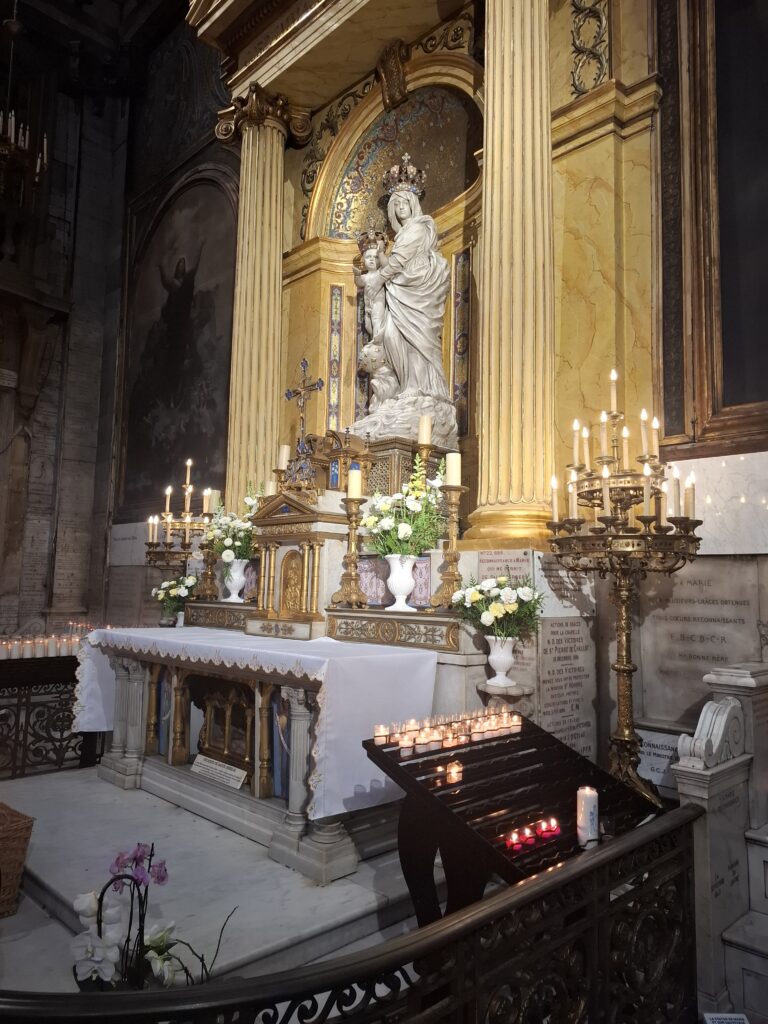
Satisfied with sandwiches and Parisian eclairs, the group proceeded to the most Teresian aspect of Paris. That place is Our Lady of Victories Church. Mr James Bascom, the member showing Paris, presented the history of the Church, from the first stone by Louis XIII to the Paris Commune. The connection to Saint Therese of Lisieux is immense. It was here that a novena of Masses was said for Saint Therese, who was terribly sick, with death seemingly in sight. On a Sunday morning during the novena, her sisters, without much left to do, prayed earnestly towards a statue of Our Lady by Therese’s bed, after which Our Lady appeared and healed her.
The participants knelt to pray before the statue of Our Lady. What felt like fifteen minutes was actually thirty. Describing her visit to the Church, Saint Therese remarked, “the graces Our Lady granted me were like those of my First Communion Day”.
Notre-Dame de Paris and Saint Julien le Pauvre certainly had their own impressions, but Our Lady of Victories was the jewel in the crown of that day.
One day was spent at Chartres, breathtaking in its own respect. The graces received were many.
Nonetheless, the most important part was the end, Lisieux.
Les Buissonnetes, Saint Therese’s home for most of her childhood, clearly showed the ambience befitting the raising of a Saint. The house outside presents itself as a bastion of order and purity. The dormer windows face the city, or the modern world, as if “looking” at it with seriousness and disavowal. We can see a kind of representation of the Little Flower’s zeal for souls.
The garden, on the other hand, shows a different perfection. A tranquil area, it moves the soul to a true calm. Not so much a naivety or forgetfulness of the world’s sin, but a confidence grounded in Faith can be seen here. This garden, then, prefigures, in a way, the Carmel of Lisieux.
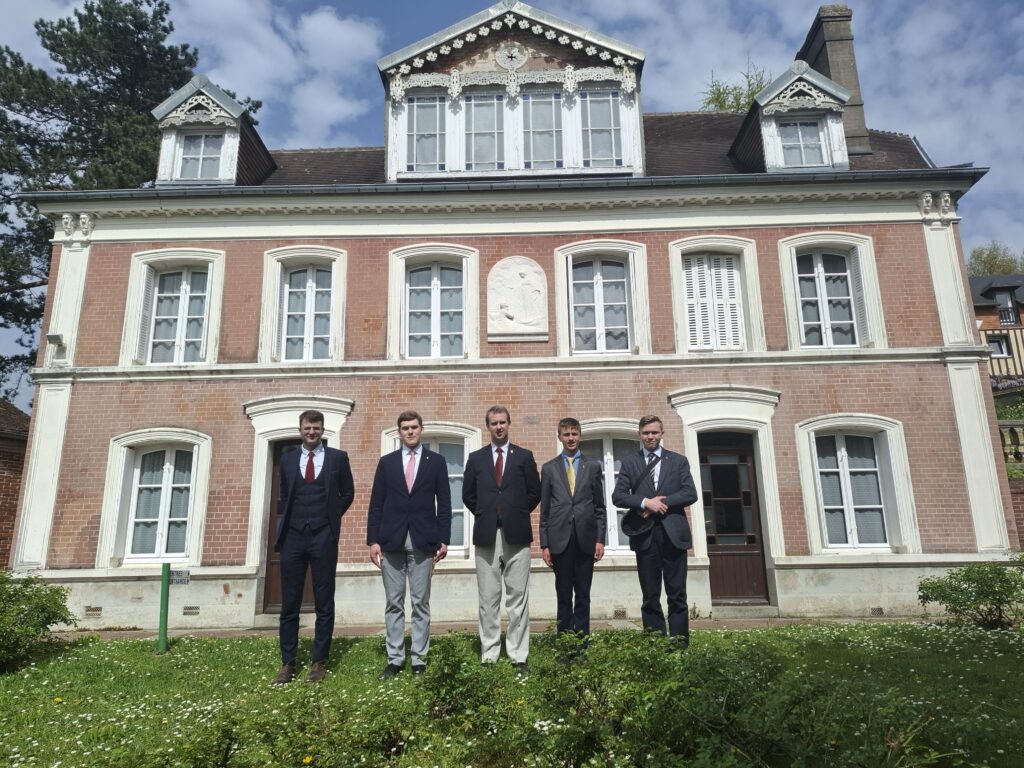
The interior gave an insight into the spirit of the Martin family. One could easily have imagined the pious conversations of the family at dinner, or the terrible suffering afflicting 10-year-old Saint Therese.
Sir Winston Churchill once said, “We shape our buildings, and afterwards our buildings shape us”[i]. Without a doubt, Les Buissonnets vindicated Churchill entirely. This notwithstanding, the medieval Cathedral of Lisieux was an even better example. The Gothic structure was where Saint Therese most commonly attended Mass, from which her love for the Church is easily understood. One of the pilgrims much preferred it even to Notre-Dame de Paris and Chartres. Simultaneously presenting the austerity of this valley of tears and pointing towards the Heavens, this Cathedral truly formed Saint Therese. The formerly private chapel of the Martin family can now be visited.
The petitions, passing through Les Buissonnets and the Cathedral, finally arrived in the mid-afternoon at the Carmel. After one last stop at the Basilica of Lisieux, the group drove to Cherbourg to board a ship back to Ireland.
This year, it is more crucial than ever that we turn to prayer and intercession to increase devotion to Our Lady across our country. That’s why you’re invited to join us in the Three Hail Marys Pledge, a powerful devotion that can bring personal spiritual benefits and national transformation. By reciting three Hail Marys daily, you honour the Immaculate Heart of Mary and seek her intercession for the conversion of sinners, the salvation of souls and the restoration of Ireland’s Catholic Faith. This ancient devotion, revealed to Saint Mechtilde, promises spiritual benefits including protection from mortal sin and the assurance of a good death. Your daily prayers will contribute to an increase in devotion to Our Lady, the conversion of sinners and the moral renewal of our country. Let us commit to this powerful devotion and seek the guidance and protection of Our Lady.